How Electrospun Nanofibers Are Reinventing Wound Care: The Science Behind Fiber Gun
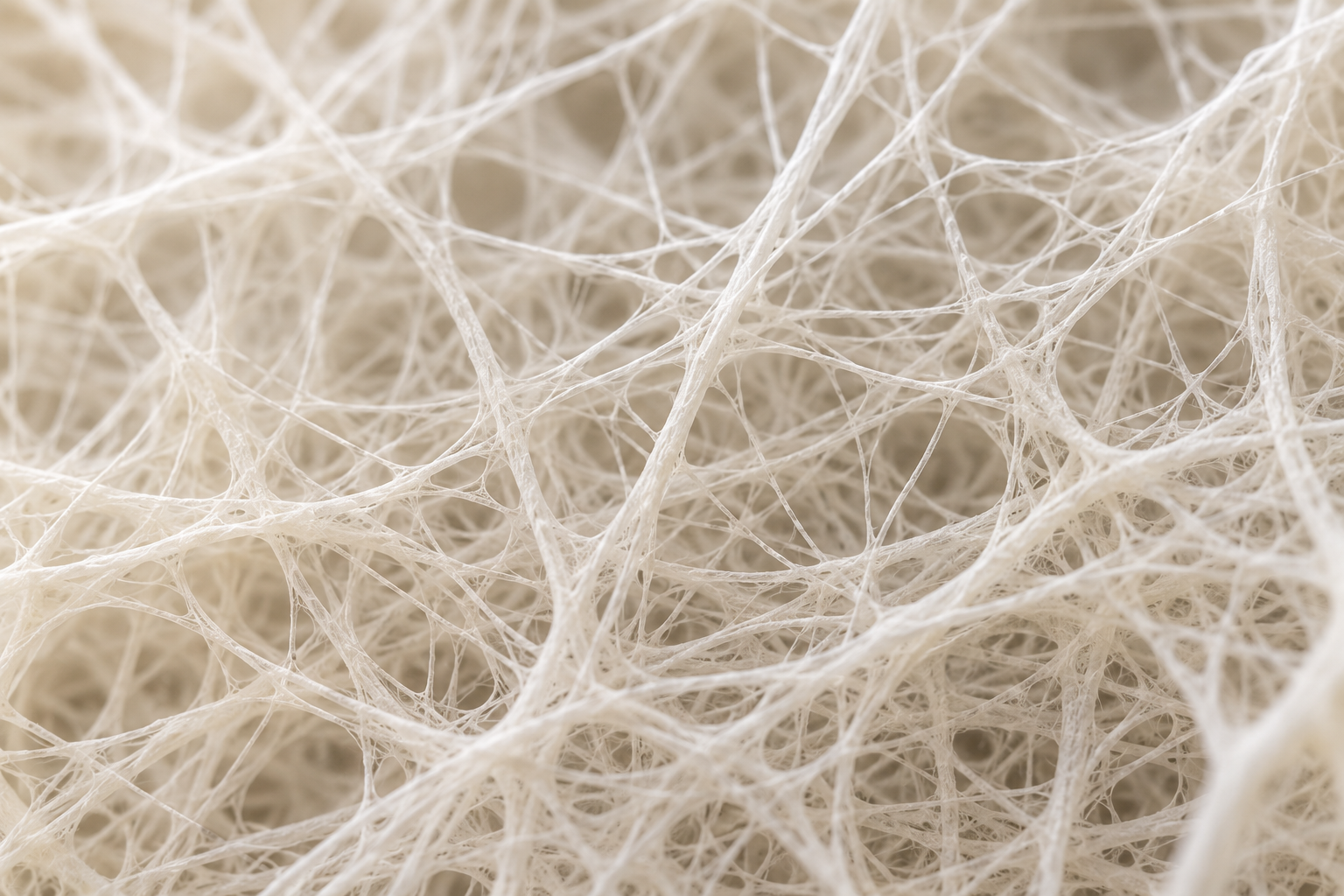
A wound dressing's job sounds simple: cover the wound, keep it clean, let it heal. But the material doing that covering matters more than it gets credit for. Gauze and standard bandages are passive - they block dirt and moisture, and that's about it. They don't actively help the tissue underneath repair itself. Electrospun nanofibers do.
We recently built a device - Fiber Gun - that takes this nanofiber technology out of the lab and puts it directly into a clinician's hand. Here's why that matters, and how it works.
Why fiber structure changes wound healing
Skin, like most tissue, is held together by an extracellular matrix (ECM) - a fibrous scaffold that cells attach to, migrate along, and use as a structural cue for repair. Electrospinning produces fibers on the same size scale as this natural ECM, typically in the tens to hundreds of nanometers in diameter. That similarity isn't cosmetic: cells recognize and respond to it. A nanofiber mesh has a dramatically higher surface-area-to-volume ratio than a conventional dressing fiber, giving cells far more surface to attach to, and can be functionalized to carry bioactive compounds that actively encourage tissue repair rather than just sitting inertly over the wound.
This is well established in lab research. The problem has always been access: producing electrospun nanofibers requires a high-voltage power supply, a precision syringe pump, and a fixed setup - equipment that lives in a materials science lab, not a clinic, a field hospital, or a diabetic patient's home where chronic wounds are often managed day to day.
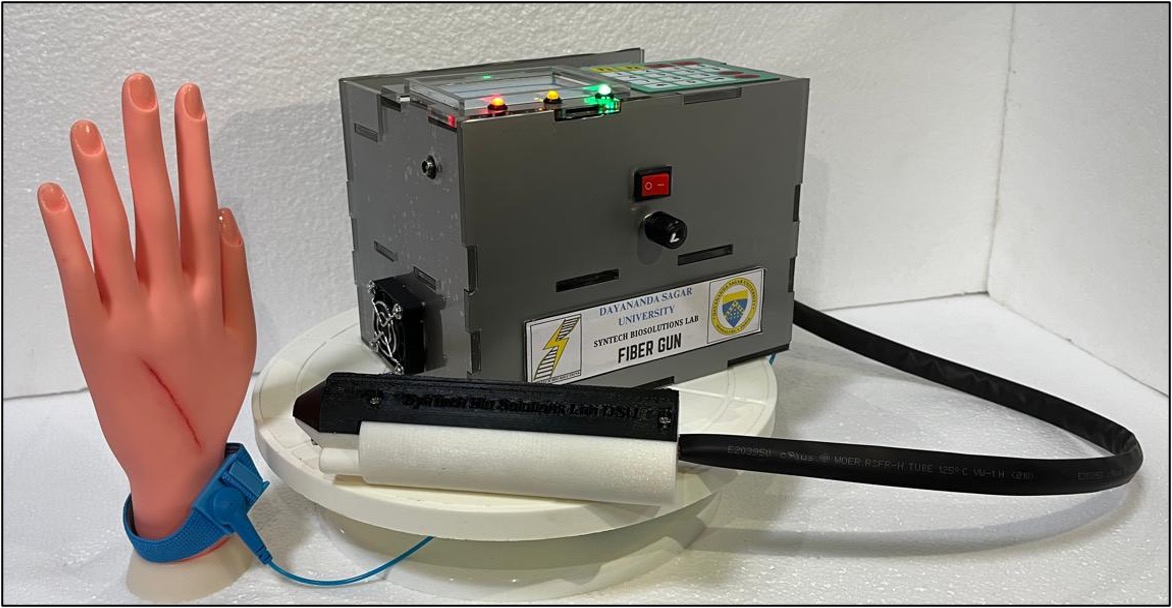
Fiber Gun: taking electrospinning out of the lab
Fiber Gun is a fully integrated, handheld electrospinning device built specifically for in-situ wound care. Instead of a benchtop rig, the high-voltage power supply, syringe pump, a microcontroller-driven stepper motor, and the battery are all miniaturized into a single ergonomic unit - compatible with standard commercial 2 mL syringes, so it doesn't require specialized consumables. The goal was straightforward: let a clinician deposit fresh nanofiber directly onto a wound, on the spot, without a lab in the next room.
Does a handheld version actually perform like lab equipment?
This was the real test. Scanning Electron Microscopy (SEM) analysis confirmed Fiber Gun produces consistent nanofibers averaging 100 to 151 nanometers in diameter - squarely within the range expected of proper electrospun nanofiber, not a degraded or inconsistent approximation of it. We also tested whether the device could carry more than plain fiber: patches made with Moringa oleifera-functionalized polyvinyl alcohol (PVA) showed enhanced biochemical activity, confirmed through FT-IR, Total Phenolic Content, and Total Flavonoid Content analysis. That means the device isn't limited to inert scaffolding - it can deposit fiber carrying active, plant-derived therapeutic compounds directly at the point of care.
Powered by a 12 V battery, the system sustains over 10 hours of continuous operation, enough for realistic clinical or field use without being tethered to a wall outlet.
Why this matters beyond the lab result
Diabetic wound care is the clearest use case - chronic wounds that need repeated, ongoing dressing changes are exactly where a passive dressing underperforms and where point-of-care nanofiber deposition could make a measurable difference. But the broader idea generalizes: any setting where lab-grade materials science needs to reach a patient directly - rural clinics, field deployment, home care - benefits from collapsing a benchtop process into a handheld one, as long as the miniaturized version doesn't sacrifice the material quality that makes the lab version work in the first place. That's what the SEM and bioactivity data were there to confirm.
If you're working on point-of-care biomedical devices, wound care materials, or electrospinning applications and want to talk shop, get in touch.
Paper referenced in this post
- Desai, B.M.A., Nadaf, S.A., Shivakumar, R.P.R., Biswas, P. (2026). Fiber gun: A Portable Nanofiber Delivery System for Accelerated Wound Healing. IEEE Transactions on Biomedical Engineering. https://doi.org/10.1109/TBME.2026.3679621